Yet legacy workshop mechanics make this fundamental facilitation task difficult. Sticky-dot voting, likes, and similar methods are too cumbersome to use as often as necessary. They reduce group judgment to selection counts, can be manipulated, and routinely mislead. Without frequent, dependable prioritization, scarce workshop time gets spent on secondary issues while what matters most gets shortchanged.
When a material decision involves several criteria, constraints, or trade-offs—as most material decisions do—such methods are entirely inadequate.
XLeap workshop software now removes this structural limitation. It gives professionals a choice of rating methods that fit the task. Rating is fast, transparent, and precise, with results available immediately. Professionals can therefore prioritize whenever the work requires it and steer the work for greatest effect.
Beyond steering the work in the workshop, professionals can use XLeap’s multi-criteria Rating and analysis to create a structured, quantified basis for better-informed, more robust decisions.

Prioritize precisely · Steer the work · Inform decisions
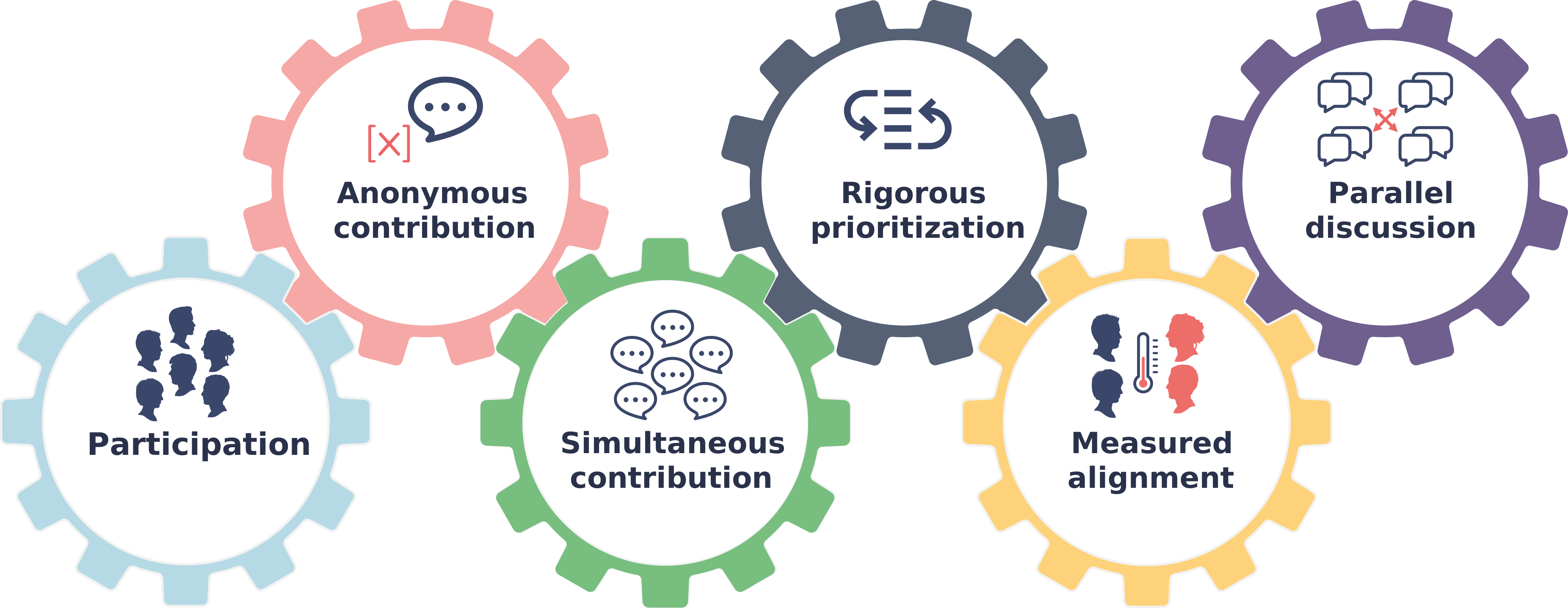
Better judgment comes from mechanics that work together.
EXPLORE THE OTHER MECHANISMS
Participation · Anonymous contribution · Simultaneous contribution · Measured alignment · Parallel discussion
Results tables can calculate indicators in computed columns, apply thresholds, and support sensitivity analysis. The group can examine the result together as soon as the Rating closes.
Results charts can map assessed items against freely configurable backgrounds. Professionals can define the axes, regions, thresholds, and background logic that fit the task. They are not limited to a standard four-quadrant matrix. A risk team might plot assessed risks on a heat map reflecting the organization’s risk appetite, tolerance, escalation, or treatment criteria. A change or OD professional might map stakeholders by influence and interest on a matrix with zones tailored to the engagement approach.
The visual model follows the task—not the other way around.
Where real-time analysis adds value, professionals can work through the results with the group while the relevant people are still available. Where the underlying qualitative reasoning has been captured in XLeap, decision-makers can drill back into the arguments when a result needs explanation. All tables and charts used during the workshop are, of course, documented in the session report.
Where the data is intended to inform a later decision outside the workshop, it can be exported in Excel format for further analysis and visualization with the specialist tools used in the relevant discipline.

EXPLORE FURTHER