
Participation
Involve the people the task needs without keeping the group small just to make it workable. Gain more freedom over who participates, where, and when.

Anonymous contribution
Participants can share what they know and think without personal exposure. Contributions are judged on substance, not on who made them.

Simultaneous contribution
Participants contribute when they have something to add, rather than waiting for a turn. They can question, challenge, and build on one another’s contributions as they appear.

Rigorous prioritization
Use rating methods and criteria that fit the task. Ask the group to prioritize whenever needed to focus scarce time on what matters and give decisions a stronger basis.
Measured alignment
See where judgments align and where they differ, rather than relying on impressions or averages. Identify contested points that need closer examination.

Parallel discussion
Examine several important or contested topics in depth at the same time, without splitting the group into breakouts. Participants move freely between topics.
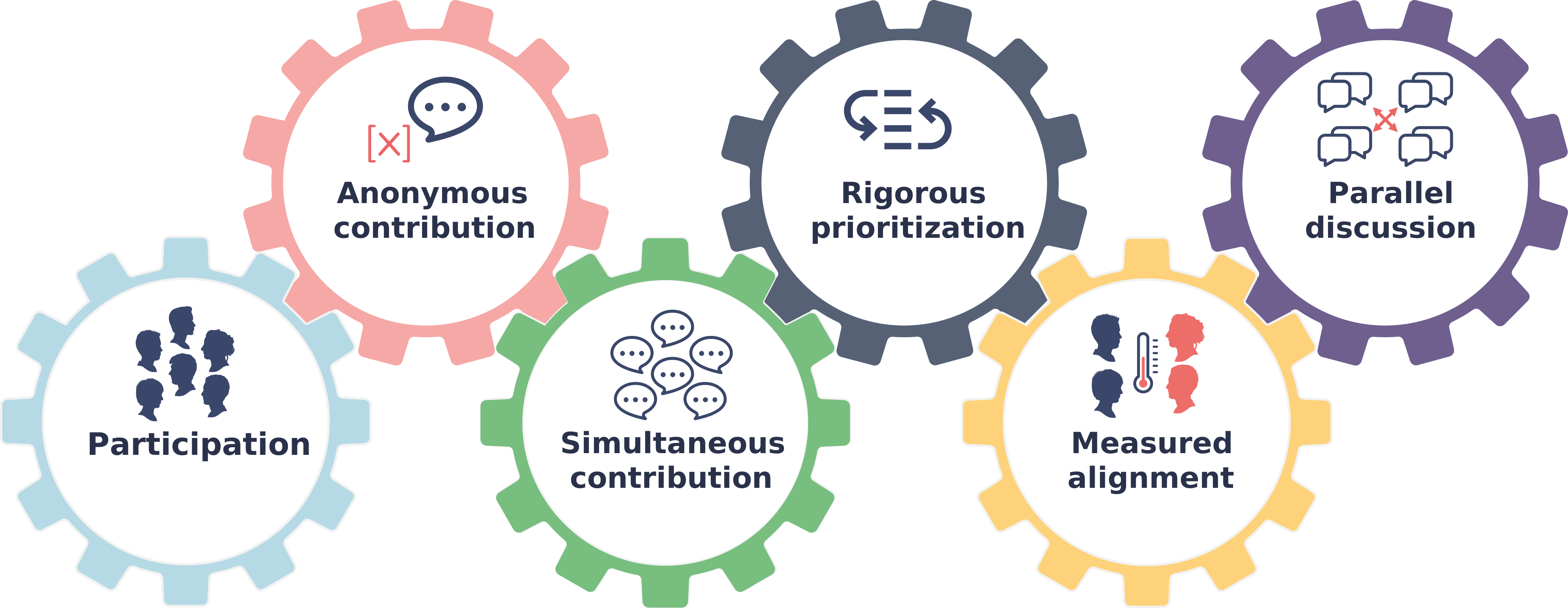
Together, the mechanisms produce stronger solutions and more robust decisions.
Broader participation · Better judgment · Faster progress
EXPLORE FURTHER