With legacy workshop mechanics, both are difficult. Even in smaller workshops, getting a word in can be hard: one person speaks, everyone else waits. So the group often has to be kept smaller than the task warrants. And even when everyone relevant is present, much goes unsaid. The results often fall short.
For decades, this was a fact of life. Many workshops moved online, but the underlying mechanics changed little. So professionals did the best they could with what they had. They—and their organizations—had to put up with these limitations.
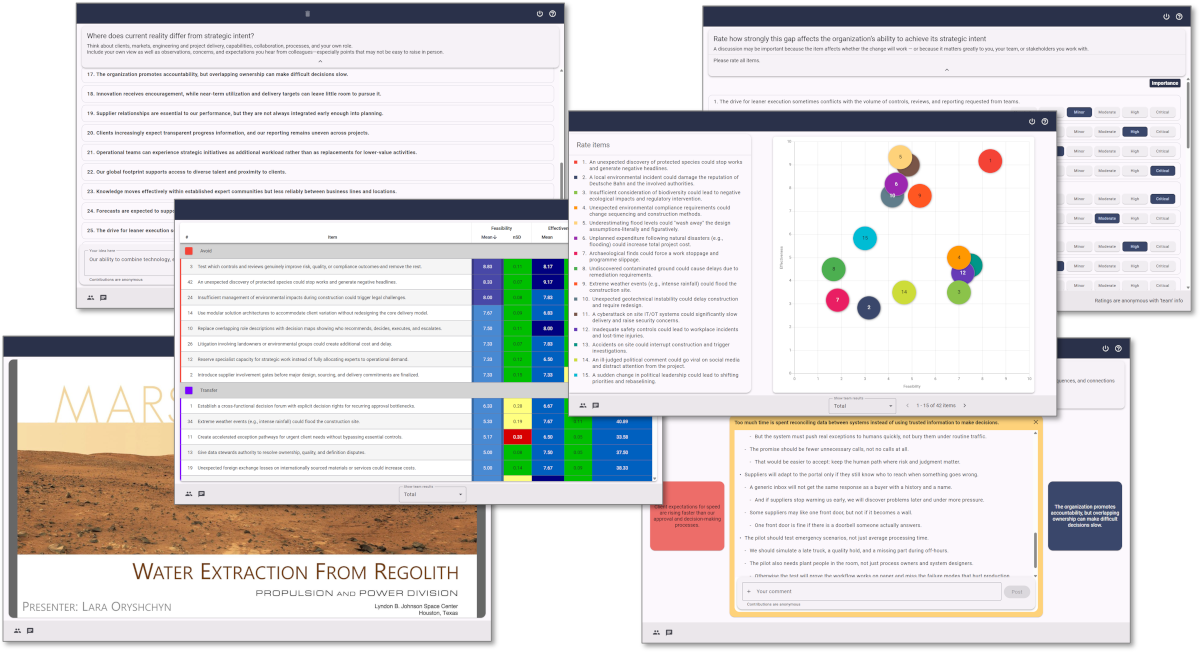
XLeap workspaces provide advanced workshop mechanics.
Today, you no longer have to. Advanced workshop mechanics open up possibilities that didn't exist before. That makes it worth taking a fresh look at workshops: What must the workshop deliver? Where do the old mechanics get in the way? What can now be done better and faster?
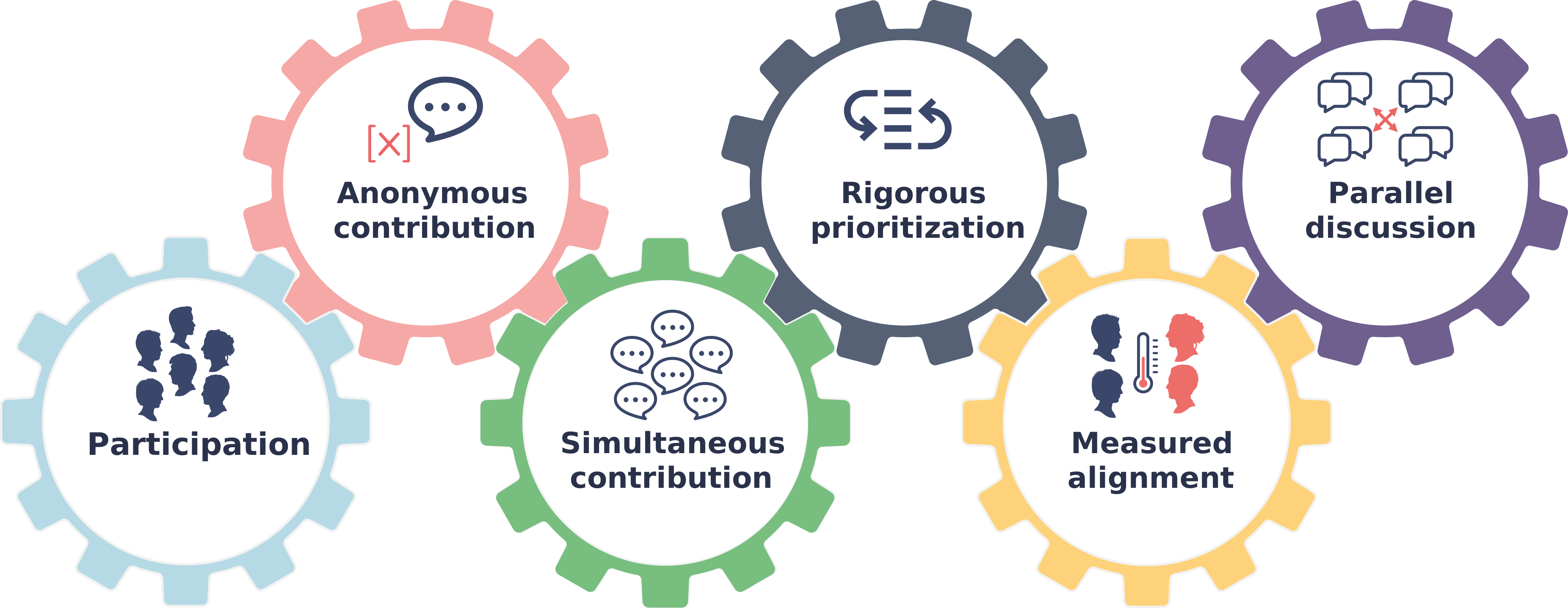
XLeap extends your workshop toolkit with six advanced mechanisms for in-room or online workshops. You can let participants contribute simultaneously, involve everyone relevant to the task, grant anonymity, prioritize rigorously, see where judgments align or diverge, and let the group explore several important topics in depth at the same time.
The outcomes you need—significantly faster.











Leading organizations rely on XLeap workshop software.

Mutual
blocking
One person talks, everyone else waits.
Many disengage.

Key people are missing
Relevant people must be left out—or they stay away.

People hold back knowledge
Critical information is missing. Results don’t hold up.

Judging ideas by who said them
People accept or dismiss contributions out of hand.

Insufficient prioritization
Weak methods obscure priorities and waste time.

Hidden disagreement
Alignment isn’t measured and stays unclear.
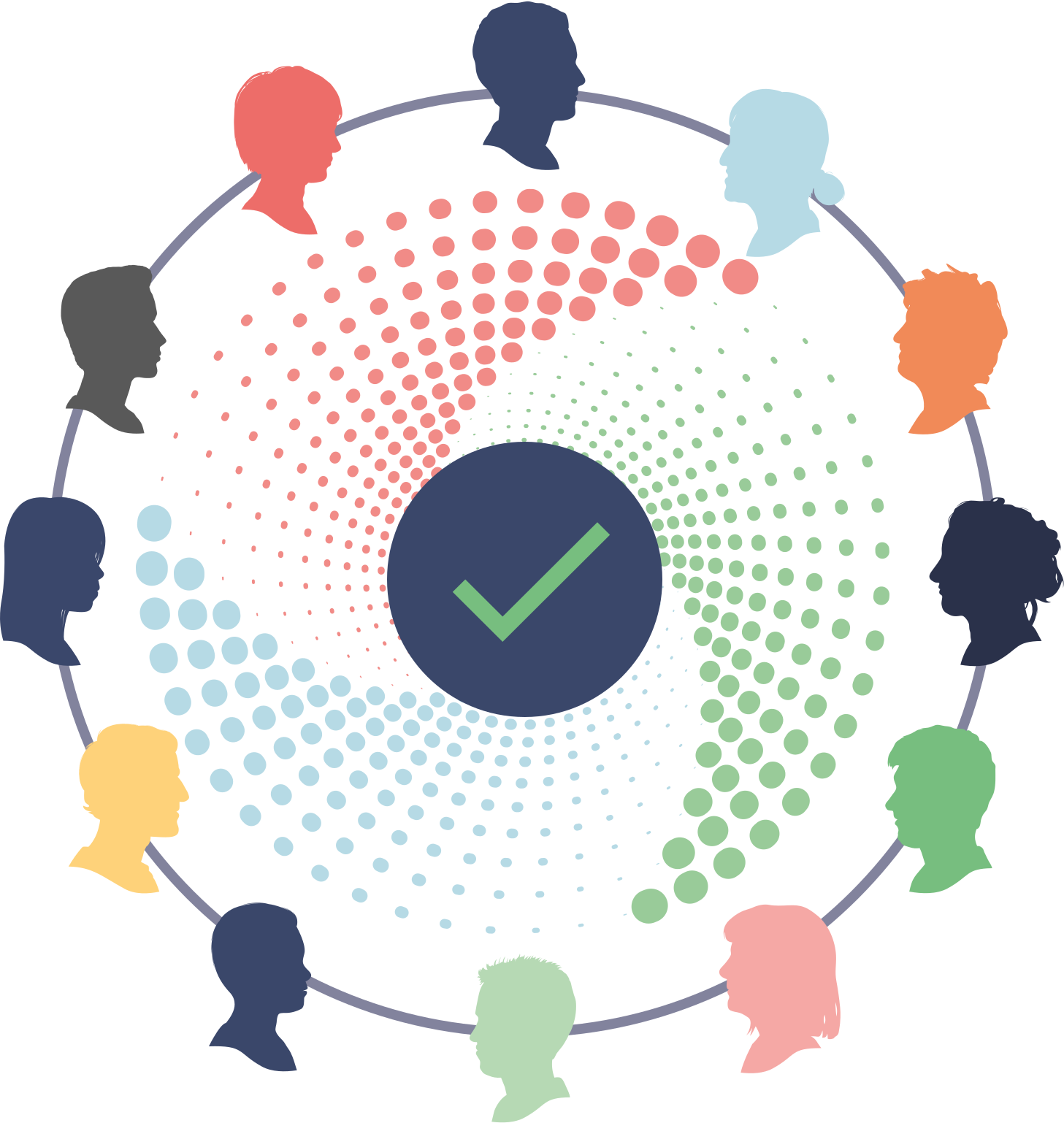
Ideal
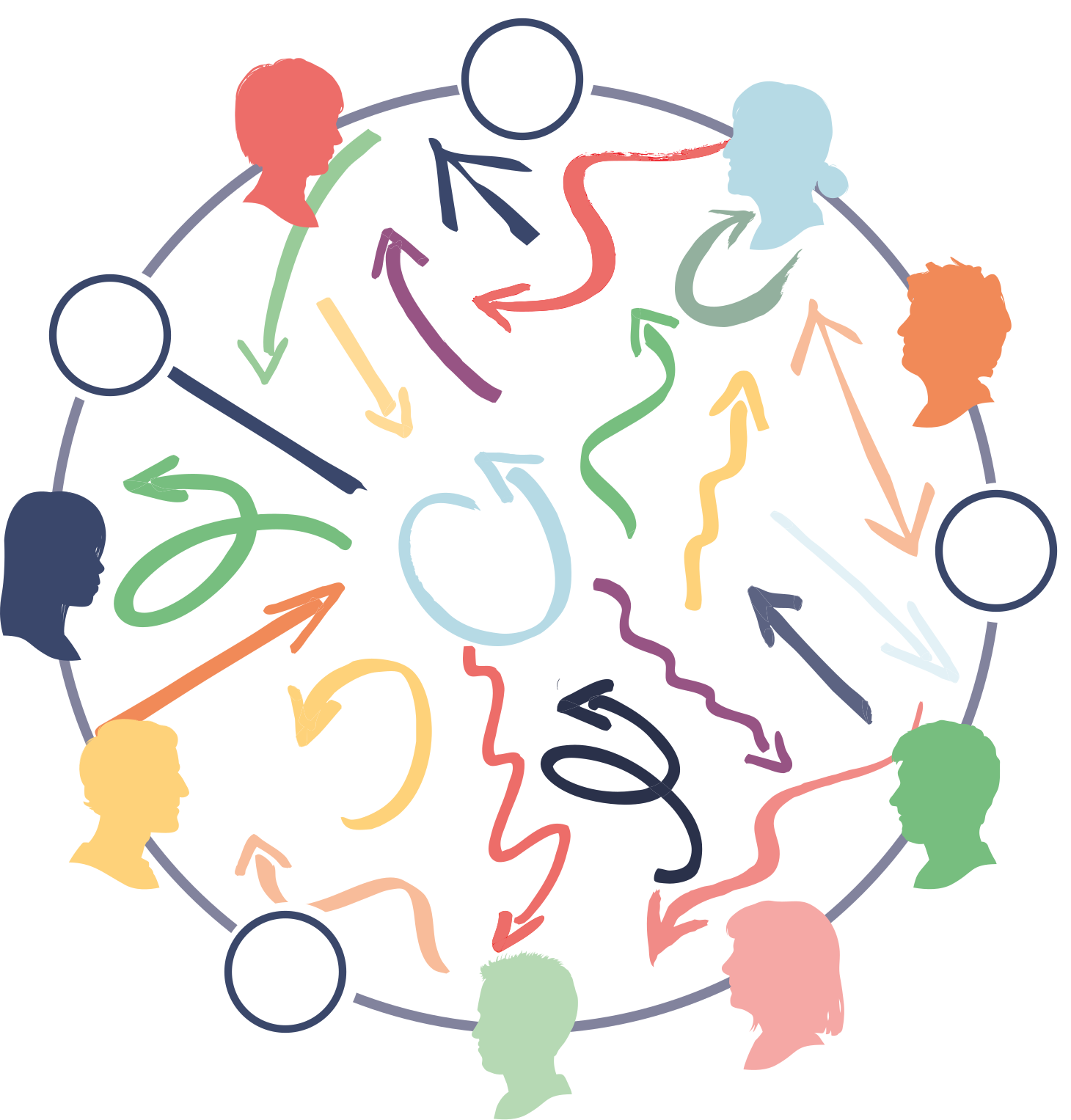
Reality
New tools. Same old mechanics. Digital whiteboards and video conferencing are useful. They make workshops easier to schedule and attend, but do little about the underlying collaboration barriers.
Video conferences can even exacerbate them. Getting a word in is harder. Reading the room is harder. Whoever runs the workshop has even less control.

Simultaneous contribution
In a spoken group discussion, only one person can speak at a time. Everyone else waits, even when they have something to add or challenge. That is frustrating and causes some to disengage. It also limits how many people can usefully be invited.
XLeap removes this bottleneck. Participants can contribute simultaneously whenever they have something to add. In brainstorming and discussion, new contributions are immediately visible to everyone. They can spark new thoughts, be expanded, challenged, or answered directly. In Rating, participants assess independently in parallel.

Participation
Because XLeap lets everyone contribute meaningfully, you no longer have to keep the group artificially small. You can involve everyone relevant to the task.
You can choose who participates and for how long to suit the task, in-room or online. Sometimes not everyone needs to take part in every phase.
Participants benefit, too. Their time is well spent, and they can make a meaningful contribution. That matters the next time they're invited.

Anonymous contribution
Being able to contribute doesn't mean sharing what you really think. Participants hold back information, sugarcoat what they say, or emphasize what they expect others to welcome. How contributions are judged often depends on who made them.
With XLeap, you can grant anonymity. Participants can share candidly what they know and think, and record their actual judgments in Rating. Contributions can be judged on substance rather than on their source. Ideas can be challenged and developed without disagreements becoming personal.

Rigorous prioritization
Workshops usually generate more issues, ideas, and options than can be pursued. But sticky-dot voting and other simple selection methods are too crude: they show how often an option was selected, not how the group judges it. They are also too cumbersome to use as often as prioritization is needed.
With XLeap, you choose rating methods and criteria that fit the task. Participants rate simultaneously and independently. Results are available immediately. You can establish priorities whenever the work requires it and have alternatives assessed against multiple criteria when needed.
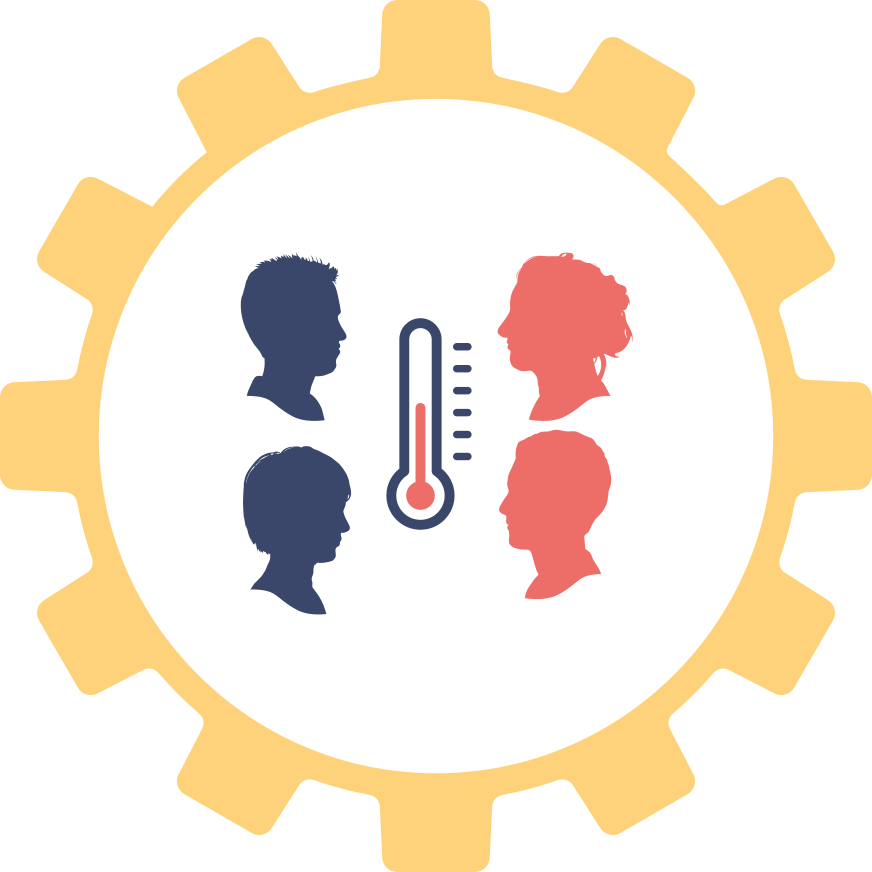
Measured alignment
Rating results can look clear even when participants' judgments differ sharply. The same average rating can reflect close agreement or sharply opposed judgments. Spoken contributions and reactions offer no reliable way to tell the difference.
XLeap automatically measures alignment for every rated item and criterion. You can see where judgments align and where significant differences exist. That lets you investigate what lies behind those differences while the relevant people are still in the workshop.

Parallel discussion
You often need the group to examine more topics in depth than time allows. But in spoken discussion, the group can tackle only one topic at a time. Breakout groups allow parallel conversations but split the group and fragment its perspectives and reasoning.
With XLeap, you can examine several important or contested topics in depth at the same time, without splitting the group. Participants discuss in writing, anonymously if needed. They move freely between topics, follow the reasoning so far, and contribute wherever they have something to add.
The group gains a deeper understanding to inform what follows.
Simultaneous contribution makes broader participation workable. Anonymity reduces social distortions in contributions and ratings. The more perspectives and options enter the workshop, the more important rigorous prioritization becomes. XLeap automatically measures alignment, revealing where judgments diverge.
For complex decisions, you can use multi-criteria analysis to make trade-offs visible and compare alternatives based on participants' ratings.
The group can examine several important or contested topics in depth in parallel, without splitting up. Simultaneous contribution and, where useful, anonymity help here, too. New insights can inform further ratings.
The mechanisms are integrated throughout XLeap's workspaces. They come into play whenever your approach calls for them. Together, they enable better solutions and more robust decisions in significantly less time.
You decide whether AI should play a role and what that role should be. In XLeap, the Host selects an AI approved for use with XLeap. The AI receives the same task as the human participants, plus a briefing with context they already have—for example, the organization, industry, workshop objective, and who else is participating. The Host also controls how often the AI contributes.
This is not static prompting. Each time the AI is asked to contribute, XLeap automatically sends it the human contributions received since its last turn. Those contributions expand the AI’s context and inspire new ideas. Human and AI contributions influence and improve one another.
Advanced workshop mechanics make this practical. AI contributes without taking airtime from anyone. Human anonymity remains protected. When the group prioritizes, participants can assess AI contributions alongside human ones on substance.
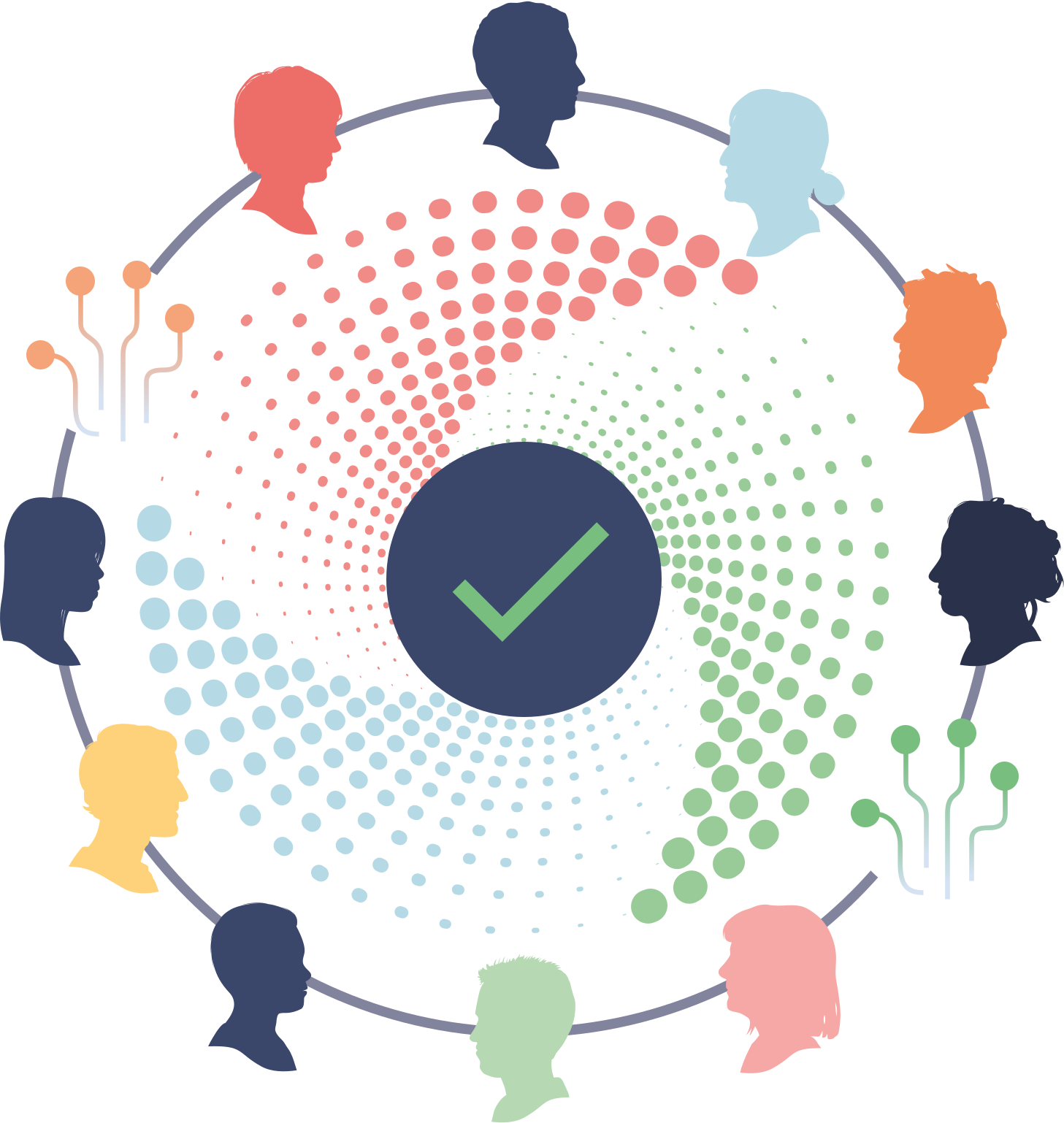
The value of an AI contribution does not depend on whether it later ranks highly. It may prompt a better human idea or open a line of thought the participants would otherwise miss.
Facilitation and conversation about how the work proceeds remain spoken, as usual: Is the task clear? Any questions? Do we need another five minutes? As a rule, the substantive work happens in the workspaces, with XLeap's advanced mechanics.
A process might gather input in a Brainstorm workspace, assess and prioritize it in a Rating workspace, then talk through the results before taking selected topics deeper in a Discussion workspace. Where the work demands it, assessments can use multiple criteria.

In each workspace, participants see the task and guidance. They have exactly the tools they need. They do not have to learn the tool first. They can contribute immediately and focus on the content.

Process Designer
Select and configure the workspaces that fit your approach—from Brainstorm through Rating and Discussion to advanced multi-criteria analysis.

Brainstorm
Participants and AI contribute ideas, facts, or assessments—anonymously, as “Team,” or named.
Associative, inspiring, and fast, with optional categorization.

Rating
Rate any items against one or more criteria using the method that fits your task:
numeric scale, ranking, budgeting, estimation, or multiple selection.

Results Tables
See at a glance what the group considers important—and where it agrees or disagrees. Criteria can be weighted, and indicators can be calculated automatically.
Excel export included.

Results Charts
Charts show trade-offs, differences between participant groups, and dominant solutions for the group to examine.
Custom heatmaps translate results directly into recommended actions.

Discussion
Discuss multiple important or contested topics in parallel—anonymously where useful.
Participants move freely between topics, focusing on what affects them and where they can contribute.

Presentation
Present slides while participants contribute through an interactive feedback channel.
See where messages land, where questions remain, and what needs clarification.

Documentation
XLeap workspaces are self-documenting.
Hosts generate Word reports at the push of a button; all content and ratings can be exported to Excel.

Templates
XLeap processes can be reused as templates.
Organizations use templates to manage quality, share know-how, and establish Best Practices for recurring use cases.

Bring in everyone you need, enable honest disclosure, assess risks against your criteria, and make better-informed treatment decisions.
Involve everyone relevant, enable honest disclosure, prioritize what deserves attention, and strengthen corrective actions and controls.
Challenge cherished assumptions from more perspectives. Assess options honestly. Prioritize rigorously. Measure alignment—for more robust decisions.
Diverge, validate, focus—from more ideas to more robust funding decisions. So the strongest concepts can be resourced—and weak ones end earlier.
Diagnose gaps more honestly and sharply from more perspectives. Prioritize and measure alignment. For stronger interventions, performance, adaptability.
Deepen stakeholder involvement, sharpen change intelligence, and prioritize. Measure alignment. Build shared responsibility—so change works in practice.
Streamline project workshops and make them more effective—from risk assessment and problem solving to lessons learned. In scope, on time, on budget.
Clarify internal customer demand, set priorities across groups, and match commitments to capacity—for transparent, more defensible allocation decisions.
Let process participants name friction points candidly. Go deeper on causes. Prioritize improvements more consistently—for stronger end-to-end performance.
Involve who matters. Surface more failure modes. Test root-cause hypotheses more rigorously. Prioritize corrective actions more precisely—to prevent recurrence.

Regional hosting & data residency
Choose where your data is stored and processed—aligned with your regulatory needs.

ISO/IEC 27001:2022 certified
Information security
audited to an international standard.

Enterprise
Controls
Central administration, roles & permissions, and governance features for organizations.